
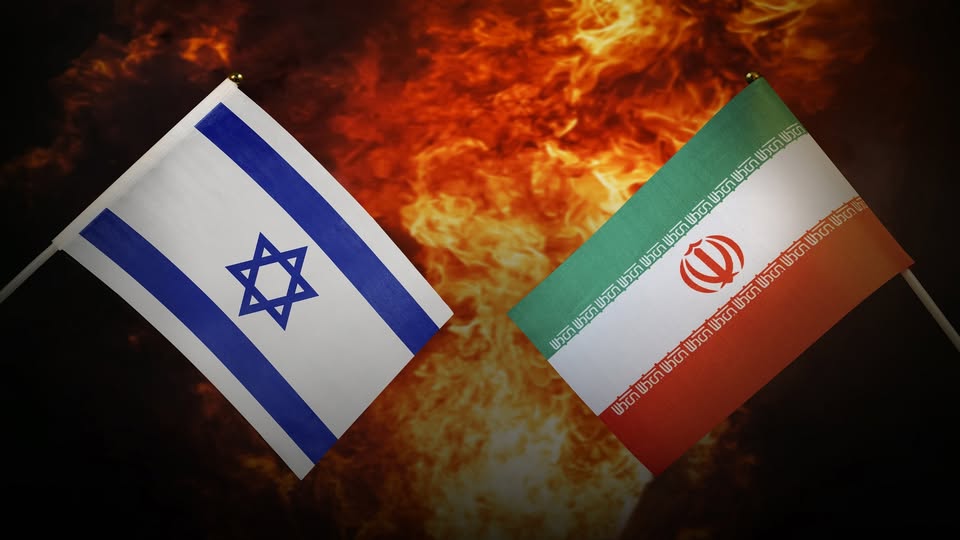
The Outcome of the First Day of War with Iran
Summary of the first day of the war. February 28, 2026 Today, at last, Israel and the United States began finishing the work left unfinished in June.
Summary of the first day of the war. February 28, 2026
Today, at last, Israel and the United States began finishing the work left unfinished in June.
1️⃣ The opening strike: broad and surprising
According to the Israeli and American version, in the first hours of the operation the following were eliminated:
Ali Khamenei, Iran’s Supreme Leader,
Ali Shamkhani, Khamenei’s close adviser and head of the defense council,
Mohammad Pakpour, commander of the Revolutionary Guards,
Aziz Nasirzadeh, defense minister,
Mohammad Shirazi, head of the Supreme Leader’s military office,
Saleh Asadi, head of intelligence for the Khatam al-Anbiya emergency command,
Hossein Jabal Amelian, chairman of the SPND organization,
Reza Mozaffari-Nia, former chairman of SPND,
and in total around 30 senior officials, commanders, and functionaries of the Islamic Republic.
These figures come from the Israeli side. There is still no independent confirmation of every name, but even if only part of this list proves true, it is the most serious blow to the regime’s decision-making center in decades.
This is a significant tactical achievement.
The surprise, the depth of the damage, and the paralysis of the ruling elite are real accomplishments that are hard to argue with.
2️⃣ Iran’s response
The response came quickly, but it was chaotic, inconsistent, and reckless.
The strikes were not aimed only at Israel, but also at targets in Arab Gulf states, including the UAE and Bahrain. In Abu Dhabi, according to early reports, at least one person was killed.
On the very first day, Iran managed to hit not only Israel, but also states in the region that are not formally at war with it, and some of them had even maintained friendly ties with it.
This is a major political blow, above all to itself.
In Tel Aviv, there was a direct hit.
One dead.
At least 20 wounded.
3️⃣ But the main thing is not to confuse tactics with strategy
Eliminating the top leadership and gaining air superiority does not equal regime change.
Iran’s system is not a personal autocracy built around one man in the way Putinism is.
Yes, Khamenei was the spiritual center and the main center of power.
But Iran’s power structure is institutional.
There are succession mechanisms.
There is a strong bureaucratic and religious apparatus.
There is a serious coercive structure, and there is also support from a significant part of the population.
The January protests were crushed, and with them the active leaders of the opposition were destroyed.
At the moment there is no mass wave in the streets, and Iranian society is living in deep fear after machine-gun fire was directed at crowds not long ago.
Regimes do not fall from the air, especially when there is no active phase of rebellion inside.
4️⃣ What this means
An excellent start to the operation.
But still very far from the end.
A prolonged, difficult, and painful conflict now looks far more realistic than a scenario of the regime collapsing quickly.
A scenario of partial gains is also possible, similar to the model of the Twelve-Day War: damage to infrastructure, temporary destabilization, but with the ruling system preserved and, accordingly, the threat preserved as well.
The first day was shock and impressive success.
But from here on, the real test of endurance begins for all sides.
Euphoria is a bad adviser.
Cold judgment is the only thing that makes sense right now.